News

JVC Pro new Projectors

JVC & Screen Innovations sit down to discus the latest JVC Pro projectors.


Read More »

Round Table – JVC – Sony – Epson – Screen Innovations

JVC, Sony, Epson, and Screen Innovations round table two piece projections, history, current state, and future.


Read More »

3 Hottest Projectors

Read More @ Sound&Vision

Sony VPL-HW50ES 3D SXRD Projector ($3,999)

An excellent all-round projector with no major issues.

+ Great contrast, color, and brightness
+ Comes with 3D glasses
– Slightly inconsistent focus across screen

Key Features

+ 3-chip SXRD (LCOS)
+ Inputs: (2) HDMI in; component; PC-RGB; IR; RS-232
+ Dimensions + Weight: 16 x 7 x 18.25 in; 21.1 lb

Setup

As with most projectors in this price range, the HW50ES features manual lens shift, zoom, and focus. No surprises there, though the feel of each is more solid than on the somewhat cheaper-feeling Epson.

The remote seems to have a button for every conceivable feature. Seems excessive to me, as after setup all I’ve ever used a projector’s remote for is to turn it on and off. At least the Sony remote has a cool blue backlight, far better than the sickly amber/orange of the Epson and JVC.

The menus are largely unchanged over previous Sony models, but they’re easy to navigate and, like the others here, are black and white (a boon for calibrators). There are color management system adjustments; ironically, though, these end up being almost superfluous given how accurate the projector’s color is out of the box.

The Sony was also exceptionally quiet, a laudable accomplishment, especially given the Epson’s impersonation of a leaf blower.

Performance

While the cabinet, menus, and remote are all pretty much the same as last year’s VPL-VW30ES, there are changes on the inside. As with the other projectors here, brightness has increased. This is always a good thing with a projector. Greater light output means you can have a larger screen while still having a punchy image. It also means 3D isn’t dim, as you’ll always lose light through the active shutter glasses.

The most I could get out of last year’s Sony on my 1.0-gain, 102-inch screen was 29.18footlamberts, a respectable amount for sure. This year, the HW50ES put out 36.74 ftL. I’ll take a 20% increase in light, sure. However, the increase came with an increase in black level by about the same amount. You’d be hard pressed to notice it, however. The black levels on all three of the projectors here, particularly the JVC, are plenty low. You can certainly argue about numbers if you want, but I never found the black level wanting.

The contrast ratio, too, is about the same. I measured around 7,647:1, better than most flat-panels, and sufficient to create an image with high contrast.

One of the other big changes this year is updated Reality Creation processing. Like Epson’s Super-resolution, it makes everything a bit crisper, and I’m sure many will like it. It does a little better job adding apparent detail without increasing noise/grain too much compared with theEpson, though the higher settings do far more harm than good.

The HW50ES’s motion resolution is around 600 lines per picture height, similar to its distant LCD flat-panel cousins. The Film Projection mode increases this to between 800 and 900. There’s no light loss measurable with the Film Projection mode, but there is a barely noticeable flicker with bright objects. The MotionFlow settings do a little better job in terms of motion resolution (with High even more detailed than Low), but these add motion interpolation, making content shot on film look unnaturally smooth.

Speaking of processing, the Sony does a neat trick I’ve never seen before on any display. In the Auto 1 film mode, the HW50ES detects the 3:2 sequence in 1080i content (like movies on cable channels or TV shows). It then dumps the 3:2 cadence, taking the original 24fps content and doing a 10:10 pulldown to match the 240-Hz refresh rate of the projector’s SXRD panels. In other words, it de-judders 24fps-native TV content. Cool, right? Lots of displays do something similar with 1080p/24fps content on Blu-ray, but this is the first I’ve seen that does it with 1080i HDTV.

Since I had all three projectors, I did what any projection-loving nerd would do: I triple-stacked them. Using a Monoprice 1×4 HDMI splitter, I drove all three, then blocked off the two I didn’t want to see. As I flipped back and forth with Brave on Blu-ray, the characters of these three projectors were revealed. And, well … overall those characters are little changed from last year. All were definitely improved, though.

The Sony looked consistently good throughout the movie, with rich colors and a punchy image. The Epson was brighter, of course, but in its brightest mode its colors and color temp were sub-par. In its accurate mode, the Epson is a little dimmer than the Sony and has a slightly worse contrast ratio. The JVC easily had the best contrast and black level, while remaining almost as bright.

For 3D I used Abraham Lincoln: Vampire Hunter (based on a true story). Two pairs of TDG-PJ1 glasses are included in the box (additional pairs cost $129). They’re a bit bulky but fairly light. Some crosstalk was noticeable. The Epson was about the same, perhaps a little better, and the JVC was much worse in this respect. The light loss is a little more than what you get with the JVC and its glasses, but since the Sony has more to start with, it’s not a big issue. As far as 3D depth goes, the Epson was a touch better and the JVC a touch worse.

Color in general was more accurate on the Sony than with the Epson or JVC. They’re all close, but the Sony’s picture seemed a little more realistic. Skin tones, like when young Abe is reading with his mom, especially looked natural.

The Sony didn’t quite have as consistent a focus across the screen as the others. This was improved somewhat by adjusting the red, green, and blue SXRD panels (in the user menu), but not entirely. Focus and panel alignment vary per unit, so yours might be fine. I just remember noting the same issue last year, and this year I spent far more time trying to get it right on the Sony than with the Epson or JVC. And still I couldn’t get it completely to my liking. Not a huge deal, but it’s worth noting.

Other than that, I couldn’t find anything wrong with the Sony. It’s consistently good across the board. However, its color accuracy aside, it doesn’t stand out in any category (though that 24fps/1080i processing trick is neat).

Bottom Line

The VPL-HW50ES doesn’t offer better performance than the Epson or JVC, so its higher price seems a bit much. But in this trio of truly tremendous projectors, the Sony is more well rounded than the others. It can’t match the Epson’s light output or the JVC’s contrast ratio, though it is bright, with good contrast and a little more accurate color than the others. The HW50ES is great, just not as single-issue excellent as the JVC and Epson projectors.


Read More »

ISE FlexGlass™

FlexGlass™ is a new rear projection screen material that offers all of the benefits of the best rigid optical panels with the added benefit of custom and curve capabilities that can only be achieved with a flexible screen material.

With its unmatched edge-blend capability, zero hotspot, almost infinite viewing angles, and ability to be rolled on a 2’ core to significantly reduce freight and jobsite handling issues, FlexGlass™ is the ideal choice for multiple-projector, edge blending, and short throw projector applications.


Read More »

SI Demonstrating New Screens at ISE 2013 in Stand #1-N53 as Part of Home Cinema Europe Display

FOR IMMEDIATE RELEASE

Screen Innovations to Show Affordable, Appreciable and Aesthetically Pleasing Projection Screen Solutions at ISE 2013 in Stand 1-N53 as Part of Home Cinema Europe Display

SI Projection Screens, Projection Screen Materials and Associated Technologies Deliver Value, Image Quality and Immersive Experience Rivaling Flat Panel Displays

Austin, TX, USA (ISE Stand #1-N53- Home Cinema Europe) – January 25, 2013 – Screen Innovations (SI) will demonstrate for ISE 2013 attendees an impressive new lineup of projection screens and screen materials which provide an immersive experience and impressive image quality, coupled with unique and innovative features that are not offered elsewhere.

In the Home Cinema Europe stand #1-N53, Screen Innovations will demonstrate both the new Black Diamond Zero Edge G2 and Gamma Maestro 4K acoustically transparent projection screens. These game-changing projection screen technologies can easily represent a greater value per square inch in the video category than traditional flat panel displays, and deliver best-in-class performance with innovative features not found elsewhere. 2013 ISE attendees are sure to be captivated with what they see.

Here is a sampling of what will be shown in stand 1-N53 by Screen Innovations:

Black Diamond™ Motorized

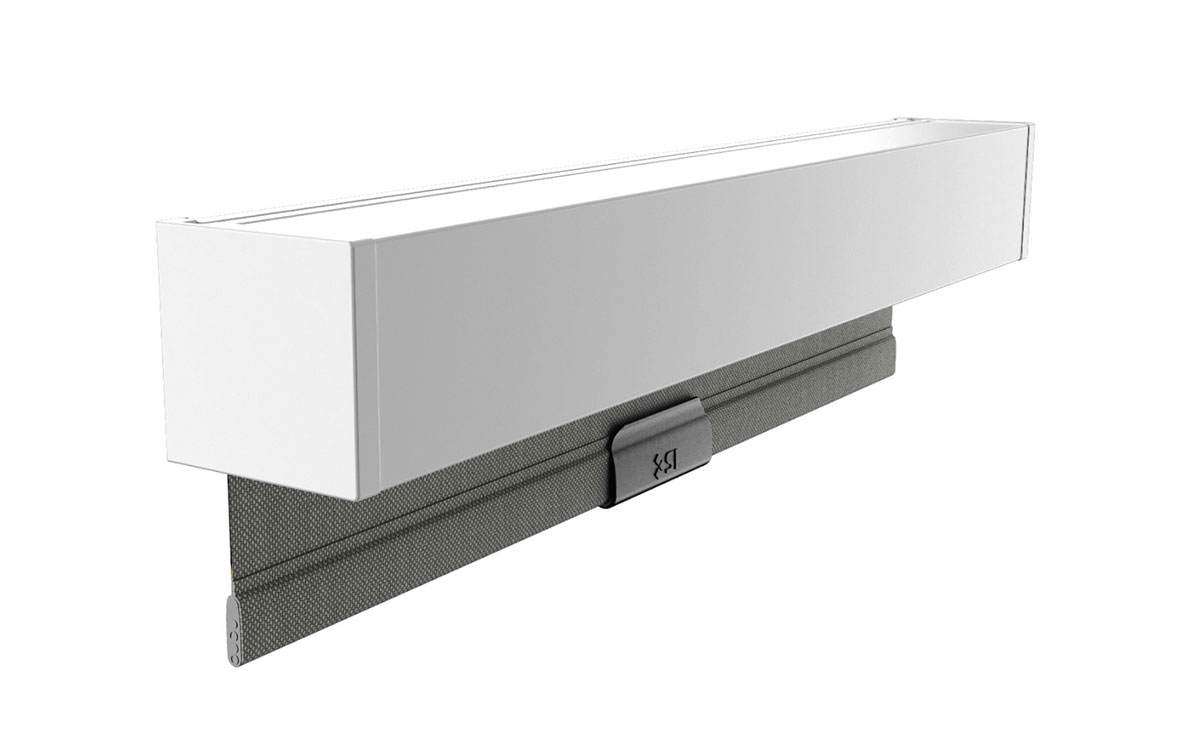
A new and truly unique motorized design utilizing SI’s award-winning Black Diamond ambient light rejection screen technology, Black Diamond Motorized is a sleek and sexy flat panel alternative that actually disappears when not in use, ideal for virtually any environment or application. Utilizing one motor, four custom helixes, and a spool of slender aircraft cable, Black Diamond Motorized silently lowers a thin wing containing the rolled Black Diamond screen downward from a recessed ceiling-mounted cassette. The cable-hung wing then stops, and from it, a small tube quickly emerges and lowers itself down to an adjustable, pre-determined image height, leaving only the image space in sight.

Because Black Diamond screens do not require masking or any black drop material whatsoever, there is no visible material above, below, or on either side of the screen surface, allowing the images projected on Black Diamond Motorized to appear as though they are suspended in air. Unlike flat panel TVs, Black Diamond Motorized delivers zero glare and reflection when used in a bright environment, and by virtue of its industry-leading Black Diamond ambient light rejection screen technology, light scatter is measurably reduced by over 75%. Delivering a next-level entertainment experience while literally disappearing into the room’s existing décor when not in use, Black Diamond Motorized appeals to the senses – and satisfies the needs of - a diverse audience in either residential or commercial environments. Black Diamond Motorized is the ultimate blend of art + science.

Black Diamond™ Zero Edge G2 Projection Screens

The New Black Diamond Zero Edge G2 by Screen Innovations is the world’s first and only multi-directional ambient light rejecting projection screen. Featuring a rigid panel, a pencil-thin 10mm bezel, and the award-winning Black Diamond screen technology that can boost a projector’s contrast by over 900%, Black Diamond Zero Edge projection screens have the look and feel of a flat panel TV, yet blend flawlessly with surrounding décor, deliver a stunning image, and provide a fully immersive entertainment experience for light or dark room applications.

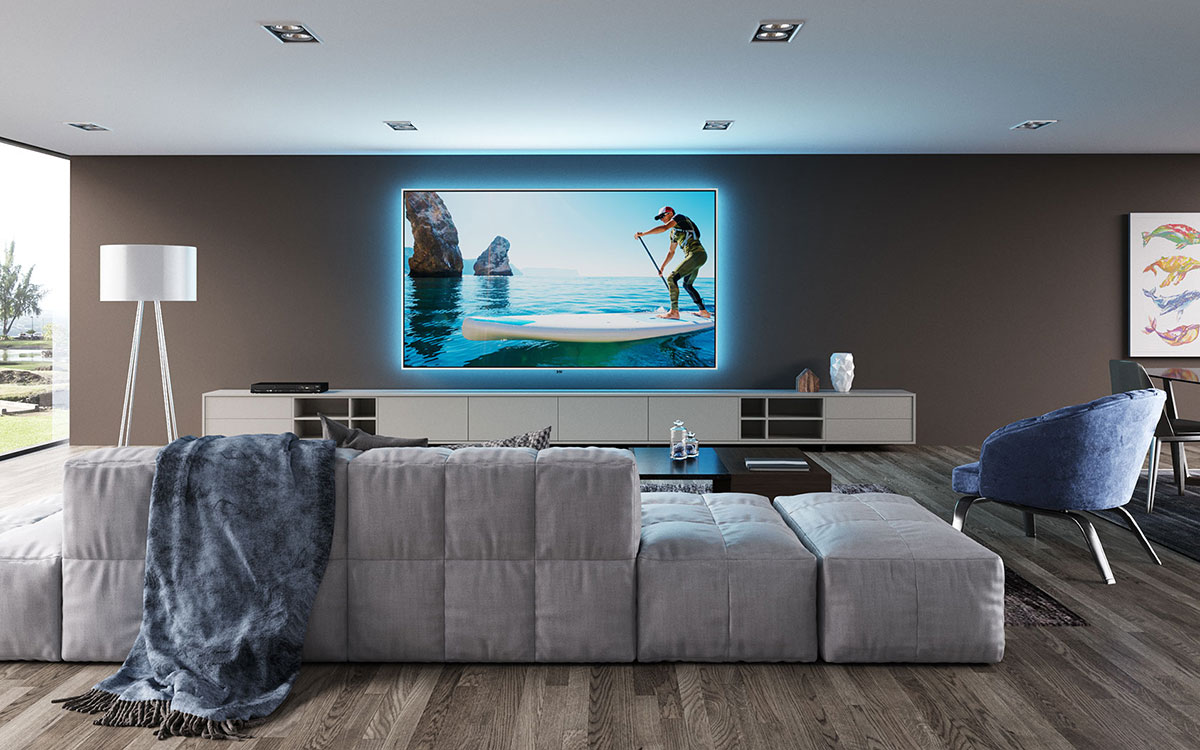
A new frame design provides better structural support, an integrated track system provides the option to inlay optional full perimeter LED Lighting behind the screen for added effect, and optimized shipping cartons simplify job site handling and can reduce freight costs by more than 65% on average. Due to the company’s proprietary Zero Edge™ design, SI is currently the only manufacturer that offers LED lighting and is promoting the benefits of using backlighting with two-piece projection systems as a way to add depth, warmth, and to enhance surrounding design and décor elements in order to make larger displays more welcome in both residential and commercial settings.

Available with Black .8 gain, Dark Gray 1.4 gain, or Silver 2.7 gain screen materials, Black Diamond Zero Edge G2 offers the most affordable, innovative, and versatile projection screen technology available, setting a new aesthetic standard that is currently unmatched in the marketplace.

Gamma Maestro 4K Projection Screen Material

Gamma Maestro 4K is a 1.1 gain acoustically transparent woven screen material that features black level and color saturation enhancement as well as excellent color neutrality, 4K resolution, brightness uniformity, and wide viewing angles which when combined, makes for a projection screen that is excellent for use with a bright projector in both moderately lit and dark environments.

Available in either fixed or motorized configurations in sizes up to 215”, Gamma Maestro’s acoustically transparent characteristics provide industry-leading audio clarity with a maximum measured variance of +2 -1 db from 20 to 20k Hz. Prices vary by configuration.

A white paper on Gamma Maestro 4K is available for download by following this link.

To download SI product images, videos, logos and associated marketing materials click on the following link: http://www.screeninnovations.com/downloads/

SI has a projection screen solution for nearly any budget, any application, and any aesthetic. ISE 2013 attendees are encouraged to visit the Home Cinema Europe stand (#1-N53), see the demo, and learn more about delivering next-level entertainment experiences to a diverse clientele by incorporating Screen Innovations projection screens into their installations. Interested parties are encouraged to visit www.screeninnovations.com or call +1 (512) 832-6939 to learn more about the SI family of products and services available. Follow SI on Twitter @SIScreens and on Facebook at www.facebook.com/screeninnovations.

Screen Innovations Media Contact:

Katye (McGregor) Bennett | Katye@screeninnovations.com | O. +1 (406) 446-1283 | C. +1 (425) 328-8640

Major Partners:

  • D-BOX Technologies redefines your personal home theatre experience. D-BOX provided an opportunity to experience the next dimension in home theatre entertainment, to feel completely immersed in the movie by living each scene as if you were part of the movie. About Our Demo – D-BOX Technologies demonstrated the next dimension in home theatre entertainment, to feel completely immersed in the movie by living each scene as if you were part of the movie.
  • Digital Projection offers an extensive line of ultra-high-performance 3-chip and single-chip DLP™ based projection systems. DPI‘s projectors continue to be the reference standard for demanding applications such as luxury home entertainment. With two Emmys for technological engineering excellence, DPI will continue to be driven by a pioneering spirit, our legendary pursuit of innovative technology, and our unmatched customer service. About Our Demo - REVEALED AT CES 2013 the 3-chip DLP® — HIGHlite Cine 330-3D, delivering up to 4500 lumens of brilliant imagery, the new HIGHlite Cine 330-3D signals a bold expansion of DPI ‘s already robust single-chip and 3-chip 3D projector line. Two new models are being introduced to CES attendees: a high contrast version delivering 2500 lumens and greater than 10000:1 contrast, and a high brightness version delivering 4500 lumens.
  • Kaleidescape designs and manufactures the Kaleidescape System, the world’s premier movie server, and delivers the ultimate cinematic experience for the home. Renowned for its intuitive user interface, the Kaleidescape System presents your entire movie and music library on any TV in any room, and enables you to enjoy your favorite movies with no waiting through previews, menus or advertisements. About Our Demo - Experience how Kaleidescape will change the way you enjoy movies with the world’s fastest Blu-ray start time, the ability to jump to any song in any concert film or musical and the ability to skip straight to the best parts of your favorite films with Kaleidescape Scenes.  You will also see how the Kaleidescape Store enables you to browse, buy and download Blu-ray quality movies directly to your Kaleidescape System.
  • CEDIA Through partnerships, messaging efforts and networking, CEDIA works to educate various audiences about the electronic systems industry and the work our members do. These initiatives ensure that potential partners and clients, as well as press, investors, government entities, seeCEDIA members as a trained and qualified workforce while recognizing the size and viability of the home technology market. Let us help you to Own the Home. Own the Network. Join CEDIA today. 

    The Ultimate Home Theatre experience was made possible by resilient partnerships with major suppliers in the industry who contributed to the success of the demonstration:

  • ADA - As the custom installation industry’s “Brand-of-Excellence”, ADA proudly manufactures its award winning home-cinema and multi-room A/V systems by hand in the USA. At the 2013 CESADA proudly introduced the Ramp Room-Amp (CEDIA’s Product-of-the-Year), Cinema Reference Mach IV($40,000) Home-Cinema Controller and Cinema Rapture line of tuner-less Audio Video Receivers. And for the Ultimate Home Cinema experience, ADA deployed the Cinema Rhapsody Mach IV preamplifier/controller, TEQ-12 Twelve-Channel Trinnov Room Correction Equalization System, and PTM-8150 Eight-Channel High-Current Power Amplifier.
  • Acoustic Innovations- For twenty years Acoustic Innovations has been the source for Personal Theaters, Theater Seating, Fiberoptic Ceilings, Acoustical Panels, and Residential Noise Control solutions. Over this time we have pioneered many of the materials and design specifications used by other companies today. Our staff has completed thousand’s of personal theaters throughout the world and has developed processes to ensure your ultimate satisfaction. At every level of cost we blend the Science of Acoustics with the Art of Aesthetics. Acoustic Innovations provided 9 Contempo CinemaChairs upholstered in Black leather with the D-BOX Ready option.
  • Bitwise Controls - The Theater was controlled with a control system and touch screen from Bitwise Controls, a made in the USA automation company who creates products and software designed to control residential and commercial integrated systems. With custom user interfaces running on devices devices like Apple’s iPad, iPhone and iPod as well as Android tablets and handsets, our products eliminate the need for dedicated touch-panels that cost thousands and are only capable of a fraction of what today’s smart devices can do.
  • DVDO - provided the DVDO Air™ Wireless for HDMI® Connection System to send high definition signals to DTV for a clean look without wires. The DVDO AIR system transfers full, uncompressed 1080p HD, so you can watch 3D Blu-ray movies and enjoy full 7.1 channel surround sound flawlessly. It looks and sounds exactly the same as it would with a high performance HDMI cable, except there’s no cable and unlike other wireless solutions not affected by common interference sources.
  • Perfect Path - Perfect Path® offers the residential and commercial installation markets the industry first and only true Locking HDMI® Cables. Our cables have also earned the prestigious DPL Labs™ Seal of Approval – independent third-party testing verifying that our cables exceed HDMI® specifications. Perfect Path cables, connectors and tools offer the same PPC® quality that has been enjoyed around the world by cable systems and satellite networks. These competitively priced, highly reliable solutions allow integrators and retailers to Connect With Something Better™ for increased profits and decreased operational costs.
  • Stewart Film Screen - The leader in screen technology, showcased a 12′ wide CineCurve, constant-height masking system, with FireHawk G3 high-contrast screen material. A variety of content ranging from classic films, HDTV sports, and modern-day blockbuster movies were presented in their correct aspect ratios; without stretching or zooming the image, and without distracting black bars. The FireHawk G3 screen material delivers a robust image, even with room lighting on, making this an ideal solution for spaces where ambient light cannot be fully controlled. Additionally, this system is available in an acoustically-transparent design so that speakers can be concealed behind the viewing surface.
  • Triad Loudspeakers -  Triad is a complete provider of loudspeaker solutions for residential multi-room and home theater system applications and is a top choice by many CEDIA custom integrators worldwide. Triad presented the Triad InRoom Gold LCR and matching pedestals for left and right of the screen with 1 InRoom Gold LCR Center and matching pedestal for below the screen,  2 InRoom Silver LCR and matching pedestals to be used as surrounds with 4 InRoom Gold DSP Subs powered by 4 RackAmp DSP 600S.
 

Read More »

“I am truly impressed”

I just want to thank you for the Black Diamond Zero Edge G2 projection screen. I truly am impressed with this product from the packaging, the included LED lighting kit, ease of mounting, and screen performance. I would be happy to let anyone know what an incredible product this is. Thanks so much Ryan and team.

Best,
Mark F. | End User


Read More »

2013 International CES Coverage

“Incredibly detailed image, with bright colors and deep blacks.”

By John Sciacca, for Residential Systems Magazine, January 2013

“Another stunning performer I discovered at CES was Wolf Cinema’s latest projector, the SDC-8. Wolf was showing Speed Racer on a 12-foot wide Screen Innovations Black Diamond cinewide screen and the image looked stunning. Incredibly detailed image, with bright colors and deep blacks. When asked what it cost, someone on the room suggested “One hundred thou…?” I knew that was a bit off, but I wasn’t prepared for the actual answer…sub $8000! I couldn’t believe how great the image looked on the fairly large screen, with subtle detail such as the discreet purple pinstriping in one of the characters suits.”


Read More »

“What a great customer-centric company”

“I just wanted to send a quick note to thank you for your call this afternoon. I am truly blown away by your customer service. I knew when I chose to buy a screen innovations projection screen I was getting a great product, what I didn’t know was what a great customer centric company I was getting behind it.  You guys are amazing and I am very appreciative of your support. Thank you. Thank you. Thank you.”

John S. | End User


Read More »

SI Demos New Projection Screen Materials at CES 2013

Solar, Lunar and Black Diamond Zero Edge G2 Shown during CES 2013, demonstrating TV-rivaling image quality, an immersive cinematic experience, and a far greater value per square inch than flat panel TVs

As featured in CES Daily News, Day Two, International CES 2013

BY GREG TARR – TWICE Magazine
LAS VEGAS — Screen Innovations (Venetian suite 30-311) will demonstrate for 2013 International CES a lineup of projection screens highlighted by the Black Diamond Zero Edge G2. The company will also show several new versions of the lesser-known Lunar 0.85 gain 4K and Solar 1.3 gain 4K screen materials.

The Black Diamond Zero Edge G2 screen is billed as “the world’s first” multidirectional ambient-light-rejecting projection screen of ering the look and feel of a flat-panel TV. The screen is made of a rigid panel, has a pencil-thin 10mm bezel, and uses Black Diamond material that can boost a projector’s contrast by more than 900 percent, the company said. Black Diamond Zero Edge projection screens are made to blend with a surrounding décor, and provide an immersive viewing experience in both light and dark room applications. The screen’s new frame design provides better structural support, an integrated track system, full perimeter LED lighting behind the screen, and special shipping cartons designed to simplify job site handling and reduce freight costs by more than 65 percent.

Screen Innovations is also offering free LED lighting through Jan. 31 to authorized dealers and retailers “to promote the benefits of using backlighting with two-piece projection systems to add depth, warmth and to enhance surrounding design and décor elements.” The screen is available at a suggested retail starting at $3,099 with either black 0.8 gain, dark gray 1.4 gain or silver 2.7 gain screen materials.

Meanwhile, the new Solar 4K 1.3 white projection screen material uses an emboss pattern that provides color neutrality and zero sparkle. The screen is suited to presenting an active 3D image, a wide viewing angle, and a vivid picture with bright punch, Screen Innovation said. Solar 4K 1.3 is now shipping in 1-inch increments and custom aspect ratios for either SI Reference Series Fixed or Reference Edition Motorized projection screens, in sizes up to 12 feet by 330 feet.

The new Lunar 4K 0.85 grey projection screen material is designed for front-projection applications and uses an emboss pattern that provides uniformity, color neutrality and enhanced contrast, to preserve color saturation and accuracy in a variety of challenging environments. Lunar 4K is suited for commercial and home theater applications with ambient light and/or those brighter projectors. It is shipping now in 1-inch increments and custom aspect ratios for Reference Series Fixed or Reference Series Motorized projection screens, or in standard sizes and standard aspect ratios in sizes up 205 inches. Prices vary on all projection screens by configuration.


Read More »

Screen Innovations HQ Tour Reveals Product Line Depth

Screen Innovations HQ Tour Reveals Product Line Depth

NOV20

Written by: Todd Anthony Puma

I was recently given the opportunity to take a trip down to Austin, Texas to visit the Screen Innovations facility and see all the new screens they have developed. Originally, the purpose of the trip was to write a review on the Black Diamond Zero Edge and Black Diamond Motorized screens only, but once I got there, I found that there was so much more to Screen Innovations than meets the eye that I felt compelled to share their entire story.

Ryan Gustafson, SI’s president and chief innovator, actually began building screens in his garage in the late hours of the night after working all day as a retail sales associate at Austin’s own A&B TV in 2004. This inspiration came after he purchased his first LCD projector, the Sony VPLVW10HT. In his efforts to maximize its abilities, he began building screens and testing them with the projector in order to achieve top quality results. His screen designs became so advanced that A&B actually picked up Ryan’s screens to sell in their store. Within a short time, Ryan branched out and opened a facility of his own facility in Austin, Texas, where he was able to expand and grow his business by roughly 40 percent every year since.

Factory Tour
As the grandson of an inventor, Gustafson is a naturally inventive person. He not only fashioned the screens himself, but he is also the brains behind much of the equipment that is used in manufacturing Screen Innovations products, many of which I’m told are unique to SI.

For instance, Gustafson and his team claim to be one of the few in the industry that design their own extrusions. In fact, they have developed the only 3.5-inch aluminum tube extrusion that has less than 1/16 inches of deflection over 16 feet, as well as the only 4-inch aluminum tube extrusion that has less than 1/16 inches of deflection over 22 feet. These capabilities not only allow for more versatility in the size of a screen, but also result in less weight and bulk, which lowers freight costs.

Blake Vackar (left), director of sales for Screen Innovations, with Todd Anthony Puma.

I was also shown how Screen Innovations uses movable snaps rather than screws to secure their screens in place, which is interesting because it allows SI screens to be uniquely interchangeable for those times when customer wants to upgrade the material on the screen. Only new material is needed, the frame remains. They also showed me how they utilize the very first automated snap machine to efficiently support this method. It was impressive to see they had built a 20×30-foot CNC robot that can be programmed to cut a screen to any size or shape that’s needed, which I can see being a benefit to the commercial market especially.

“We use the latest FEA [finite element analysis] software and spend countless hours of development time perfecting shapes that break the mold of what is possible in projection screens,” Gustafson stated.

Ryan’s brain is constantly churning out new ways to perfect their screens and advance the two-piece projection category. He even shared with me an awesome story that illustrates his ingenuity and explains how he came up with a solution to secure the Black Diamond Motorized projection screen to its housing. As the story goes, they spent three and a half years developing Black Diamond Motorized, and in particular, ways to get the screen to lay flat. The answer dawned on him one night while he was struggling to get rubber bands out of his daughter Taylor’s hair.

“We needed to solve a problem we were having with deflection when we were mounting the screen to the wing,” Gustafson explained. “You see, the wing has natural deflection, which was allowing the screen to get tight in the middle and soft at the edges. We tried more than 50 solutions, but they allowed the edges to get tight while the middle was soft; there was seemingly no way around the issue. One night, as I tried to extract a tangled band from Taylor’s hair, I had an inspiration. The next day, I brought a handful of her hair bands to the factory and went to into the lab. We laid out the screen, punched holes along the top of it and put the hair bands through the holes. The hair bands equalized the screen tension perfectly, which eliminated the need for 92-, 100-, 106-, 110-, 120-, or 133-inch screens to each require a unique wing that would counteract deflection.”

When the Black Diamond Motorized screen suffered from deflection issues when mounting the screen, Gustafson solved the issue with his daughter’s hair bands. Purpose-made bungees are now used.

With Taylor’s hair bands in place, the edges and middle of the screen were both tight, which solved the problem. Now, instead of Taylor’s hair bands, SI uses ethylene propylene diene monomer (EPDM) bungees that are made for this purpose.

Screen Reviews
All of the Screen Innovations fixed projection screens use microfiber frames as opposed to velvet, because microfiber attracts less dust and is easier to maintain. Black Diamond screens are unique in that they feature a laminate screen that is water resistant and fingerprint proof, which allows dust and other contaminants to wipe right off. This is important to note, as other screens with sprayed-surfaces lose portions of their optical finish when they are touched or cleaned, which ultimately deteriorates the picture quality. In my experience, customers are always afraid to touch their screens, even if they know they can. From an integrators perspective, this provides a great opportunity to get back into a client’s home to clean their screens, while using the opportunity to update, upgrade, and upsell new technologies to a captive audience who already trusts you to provide the very best solutions for their particular situation. As integrators, we must always be selling or we’ll march ourselves into extinction.

As I reviewed the line, I wanted to keep as many constants as I could to get an accurate comparison between the screens. I used a non-calibrated Epson Powerlite Cinema 6010 projector, stationed 12 feet from the screen and in the “cinema” setting for each screen I reviewed. I also used the same scenes from Disney Pixar’s Wall-E and The Amazing Spiderman as my demo movies for each of the screens I reviewed.

Lunar 4K 0.85-Gain Projection Screen
The Lunar 4K 0.85-gain grey screen was developed to create deeper blacks and to work in an environment where there would be soft ambient light. I viewed it in complete darkness and also flanked by two 75-watt floor lamps. One of the most common misconceptions about the Lunar Grey screen is that it does not improve contrast, but instead improves the black levels at the expense of the white levels, for which our eyes will compensate. The black levels were deep and created a great contrast with most of the other colors. On the contrary, I noticed that there was noise around the white images, mostly around wording. While viewing Wall-E, one of the first scenes has a large blue screen with white writing and there was almost a haze around the wording, which distracted my eye. I, personally, would not choose this screen option for my clients.

Gamma Maestro 
The Gamma Maestro is an acoustically transparent woven screen material that does not absorb ambient light the way a gray screen would. It is at its best in a darker environment, although it will still perform in very minimal light. It has a very warm, neutral and inviting hue that it adds to the image. While all of the color is rich and defined, I found that reds, grays, and blues were particularly heightened. The noise around white images were not present in this screen, the wording from the same scene in Wall-E was crisp and clear.

Solar 4K 1.3 Gain
Of all the white/grey screens that Screen Innovations offers, this one was by far my favorite. The image was flawless, with tight colors, deep black levels and crisp, noiseless white details. In a darker environment, I found that the quality of the image was comparable to the Black Diamond. In a particular scene from The Amazing Spiderman, there is a close up of Lizard’s face where he is transforming from Lizard to human and you can actually see the scales flaking away from his face. The picture was so pristine that you could even see the outline of the contact lenses the actor wore to create the Lizard’s eyes. It was an incredible visual. This would be the other screen outside of the Black Diamond that I would most often offer to my clients.
A demo from The Amazing Spiderman on SI’s Solar 4K 1.3 Gain screen. 

Black Diamond Zero Edge 1.4 Gain
Prior to Black Diamond, two-piece projection was primarily used in dark environments, not because we wanted to, but because we had to. Now with Black Diamond, a screen can look just as good in ambient light as it does in a dark room. Unlike high-gain screens, however, Black Diamond rejects ambient light; therefore, the onscreen image is not diluted.

The technology behind Black Diamond allows it to reject ambient light coming from both the vertical and horizontal plane. The only time this doesn’t work is when a light source is coming from behind the projector. For example, if you have a west-facing window located directly behind the projector at 5:00 p.m., you’d probably want to cover that window, just as you would with any other display.

Black Diamond has been professionally measured to improve contrast 900 percent over a matte white 1.1 gain screen. In my opinion, the black levels in this screen provide a depth to the image like no other screen. Even 2D images seem to appear 3D. I thought that the scene from The Amazing Spiderman couldn’t look any better than it did on the Solar screen, but the colors provided by Black Diamond are even more vivid and bright, and the lines clean and distinct. Black Diamond Zero Edge is also the only screen that can incorporate an LED lighting kit for around the border of the screen. LED lighting enhances the color images on the screen and relaxes the viewer’s irises, allowing brighter content to be viewed in a darker room for longer periods of time without eyestrain.
A demo at the Republic Gastropub bar illustrating the difference between matte white and a Black Diamond screen.

Black Diamond Motorized

The Black Diamond Motorized screen allows you to reach a client base who just does not have the space or budget for a dedicated home theater room. It is the world’s first “rollable TV,” as the Screen Innovations team would call it. It provides integrators the ability to put a TV where it should go, not where it has to go. For instance, I have a number of clients in New York City whose walls are all windows. This screen can be installed right above the window and dropped down when they are ready to watch TV. The installation is simple because SI uses the same aluminum brackets for mounting all motorized screens in its line. It will likely take an integrator the same amount of time to install Black Diamond Motorized as it does to mount a flat-panel TV.
Before this trip I, like many others, only thought “Black Diamond” when I thought of Screen Innovations. They have shown me that they have a full line of screens that can meet any price point and any desire a client may have without stepping out of their line. Every screen manufacturer has screens to offer, but only Screen Innovations has Black Diamond. Much like Apple, other manufacturers can imitate, but not duplicate the Black Diamond.

The Future of SI
Screen Innovations has been consistently experiencing 40 percent growth each year in domestic and international sales. They have already become the “it” screen in the residential scene and are just beginning their passage into the commercial world. Their screens were featured in many of the leading projector manufacturer’s booths at CEDIA and Infocomm in 2012—Epson, Sony, DPI, Wolf, Panasonic, JVC, Optoma, and Sim2 all used Screen Innovations in their booths, and BenQ even had a mind-blowing circular 65’ Black Diamond screen that they used as their overhead sign that SI created for their exhibit.

After two years of R&D, the team at Screen Innovations just launched a new commercial technology called FlexGlass. FlexGlass is a new rear projection screen material that offers all of the benefits of rigid optical glass and acrylic panels with the added benefit of custom and curve capabilities that can only be achieved with flexible screen materials. FlexGlass eliminates projector hot-spotting 100 percent, and from what I saw, has zero sparkle. It seems this would be an ideal choice for multiple-projector, edge blending, and short throw projector applications that are often needed in commercial, digital signage and some higher-end residential settings. One other note FlexGlass is 20 times lighter than Glass and ships on a roll, and costs much less to ship than other solutions.

Ryan and the team at Screen Innovations are always striving for the next technology and accept feedback from not only their team, but from integrators too, as they are not only looking out for their own success, but for the success of their dealers. “Though the awards we have received are appreciated, our greatest reward is when our dealers are profitable and successful,” Ryan said to me.

Todd Anthony Puma is president of The Source Home Theater Installation in New York City.


Read More »